
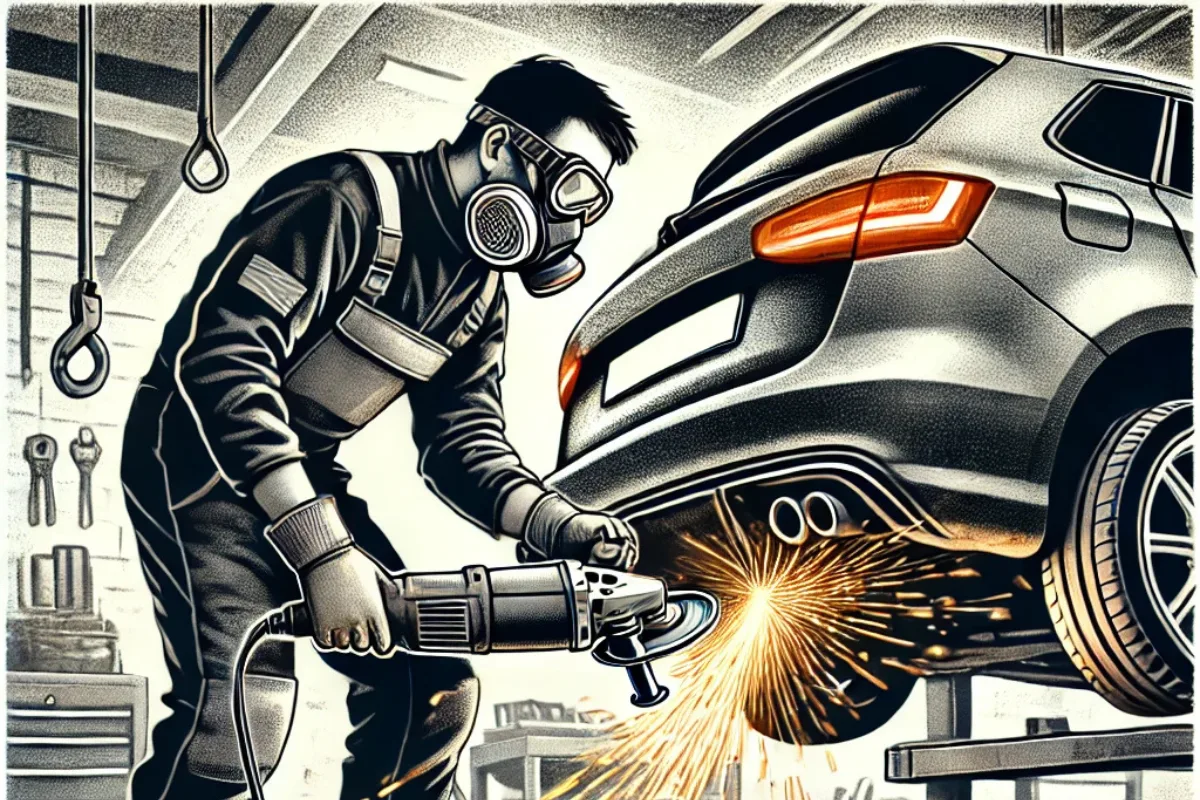
These days it is easy to find online offers from services that promise to “solve the DPF problem” once and for all. Many vehicle owners take this step without seeing anything wrong with it — they are often convinced that removing the filter is perfectly legal. Unfortunately, awareness of the issue is still limited, and many drivers do not realise the legal, environmental and financial consequences of removing the DPF.
What the DPF does
The DPF plays a key role in reducing emissions of soot and other harmful substances. As the number of cars on the road has grown, so has air pollution in towns and cities. The particulate filter was introduced to cut the amount of harmful particles in the air we breathe — and diesel exhaust without a filter is particularly rich in them.
Why do drivers remove DPFs?
Diesel engines became popular mainly because of their lower running costs. Over time they were fitted to more and more passenger cars, which brought problems: short trips, traffic jams and low speeds in town stop the soot in the filter from burning off properly, so the filter clogs. In this situation, many drivers decide to have the DPF removed, encouraged by workshops that specialise in this kind of “service”.
Is it legal to remove the DPF?
Online advertisements often mislead customers. Removing the DPF is not allowed, and neither is driving a vehicle without it on public roads. Owners of such vehicles risk a heavy fine and a failed roadworthiness test. Businesses that offer or carry out DPF removal can face consequences too.
Illegal, whatever the adverts say
Many people wrongly assume that, if these services are widely advertised, they must be legal. They are not: removing the DPF from a vehicle used on public roads is illegal.
The alternative: professional DPF cleaning
Instead of removing the filter, have it cleaned. The hydrodynamic method — for example with a DPF Master Flash™ machine from XTON® — restores the filter to its original performance at a fraction of the cost of a new one. This service is becoming increasingly popular, which makes it an attractive business opportunity for workshops.
The UK, Ireland and other countries
United Kingdom. Using a vehicle that has been modified so that it no longer meets the emissions standards it was built to is an offence, and removing the DPF almost always has that effect. According to UK government guidance, the fine can be up to £1,000 for a car and up to £2,500 for a light goods vehicle. Since February 2014 the MOT has included a check for the DPF: a vehicle that was built with a DPF and no longer has one fails. Since 20 May 2018, a diesel car with a DPF gets a major fault if the tester can see smoke of any colour coming from the exhaust, or finds evidence that the DPF has been tampered with. Removing the filter may also affect your insurance cover.
Ireland. The NCT includes an exhaust emissions test, and testers check that the vehicle’s emission control system is complete and properly connected. A car whose DPF has been removed no longer complies with its type approval, should not pass the NCT and cannot legally be driven on public roads. Tampering with emission control equipment is illegal.
Elsewhere in Europe. Other countries take a similarly strict line. In Germany, Austria and the Czech Republic, for example, driving without a DPF can lead to heavy fines and the loss of the vehicle’s road approval.
Conclusion
Removing the DPF carries real risks: fines, a failed MOT or NCT and, ultimately, a vehicle that cannot legally be driven. Emissions checks are only likely to get stricter over time. So instead of taking the risk, it makes sense to have the filter cleaned. If you run a workshop, consider adding DPF cleaning to your services: it is an investment that can pay for itself quickly.