
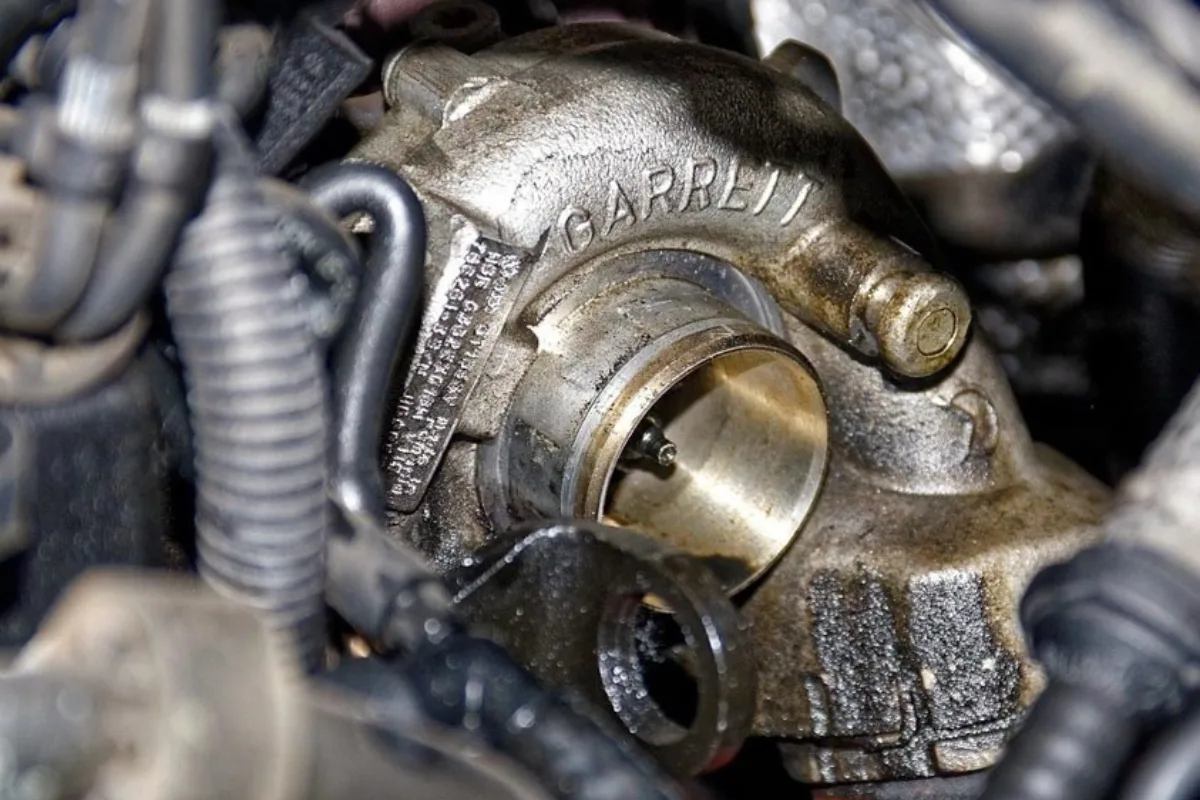
Unfortunately, yes. A clogged or faulty diesel particulate filter (DPF/FAP) or catalytic converter can become a real nightmare for your turbocharger. It also works the other way round: a faulty turbocharger can cause the DPF to clog.
A fault in one component often leads to problems elsewhere in the exhaust system. A clogged particulate filter significantly increases the mechanical load on the turbocharger. DPF problems also often go hand in hand with fuel getting into the engine oil — while the turbocharger depends on proper lubrication. And an engine with a damaged turbocharger produces more soot, which in turn clogs the filter’s channels.
Today, with engine downsizing and tighter emissions rules dominating the automotive industry, it is increasingly hard to find engines without a turbocharger or a complex exhaust after-treatment system. Diesel engines without DPF/FAP/SCR systems are gradually becoming a thing of the past. As is often the case, extra components can bring extra problems and unexpected costs: the service life of the turbocharger and of the particulate filter are closely linked, and a fault in one sooner or later leads to the failure of the other.
A properly working DPF/FAP captures over 95% of soot particles, which is why it fills up quickly. To avoid frequent replacement, the system has to regenerate the filter. To burn off the soot, the temperature inside the filter core has to be raised — for example by injecting extra fuel, or by using an additive that lowers the temperature needed to burn off the deposits. Unfortunately, even when self-cleaning works as it should, it is not 100% effective: ash does not burn, so it stays inside the filter and builds up until the filter clogs. On top of that, active regeneration can go wrong, be interrupted or, for various reasons, not start at all. In such cases deposits build up faster and the flow through the filter drops.
During active regeneration, extra fuel is injected late in the combustion cycle so that it burns in the exhaust and heats the filter. If the process is interrupted, some of that unburnt fuel ends up in the engine oil, raising the oil level and lowering its viscosity. This is why, in some cases (especially in cars used mainly in town), the oil level can be seen to rise; if that happens, the oil must be changed straight away and the cause diagnosed. Back pressure is what really matters for the turbocharger: it rises sharply when the DPF is completely clogged and the exhaust gas can no longer get through it.
Consequences
- Damage to the turbocharger shaft caused by the exhaust gases.
- Oil forced out of the shaft bearings and coking of the residue.
- Poorer lubrication.
- Mechanical damage inside the turbocharger (vanes, bearings, shaft).
How to prevent the damage?
First of all, act on the first symptoms of a clogging DPF/FAP and make sure that the filter’s self-cleaning process works properly and without interruptions. Do not ignore warning lights and messages on the dashboard: react quickly so that one fault does not lead to others.